Why a New Roof Needs More Than Good Shingles to Last
A new roof can look flawless from the street and still have a serious weakness underneath. Damaged roof decking may prevent roofing materials from fastening securely, create an uneven installation surface, and allow existing moisture problems to continue beneath the new covering.
For homeowners researching roofing in Lake Oswego OR, understanding the condition of the roof deck is an important part of planning a lasting replacement. Precision Roofing & Gutters provides roofing services for homeowners who want their roofing system to protect the structure beneath it, not just improve its appearance.
Roof decking, also called roof sheathing, is the layer attached to the roof framing that supports the underlayment and outer roofing materials. Replacing damaged decking before installing the new covering helps create a stable foundation and reduces the chance that concealed deterioration will compromise the finished system.
What Does Roof Decking Actually Do Beneath a Roofing System?
Roof decking serves as the structural surface to which much of the roofing assembly is attached. It supports underlayment, shingles, and other roof components while transferring certain loads to the rafters or trusses. Its condition, therefore, affects more than just the appearance of the finished roof. The deck must be sufficiently sound, properly supported, and suitable for the fastening requirements of the selected roofing system.
A roof can have several layers that perform different jobs. The framing provides the main structural support, the decking creates the continuous surface, underlayment adds a layer of moisture protection, and the outer roofing material sheds rain and resists exposure. Flashings protect vulnerable transitions around chimneys, vents, valleys, and roof edges. Damage to one layer doesn’t automatically mean every layer has failed, but problems in the decking can affect how the layers above it are installed and perform.
The distinction is especially relevant during roof replacement. New shingles cannot restore the strength of deteriorated sheathing, and additional underlayment cannot make a weak fastening surface reliable. If nails or other approved fasteners cannot achieve the required holding power in the deck, the roofing installation may be compromised even when the visible materials are new.
How Moisture and Age Cause Damage that Can Remain Hidden
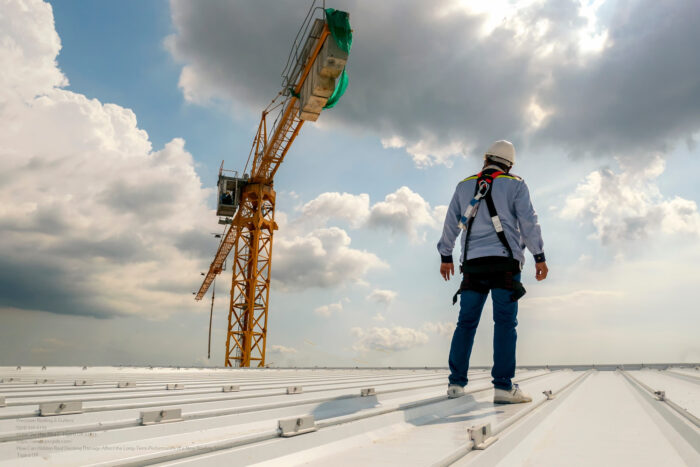
Water intrusion is a common cause of roof decking deterioration. A small leak around flashing, a roof penetration, or damaged shingles may allow moisture to reach the sheathing. If the source remains unresolved, repeated wetting can cause wood fibers to swell, weaken, and eventually decay. The visible roof covering may conceal the affected area, especially when the leak has been intermittent.
Moisture doesn’t always enter from outside. Warm indoor air can carry water vapor into a roof assembly through gaps in the ceiling plane. If ventilation, air sealing, or other moisture-control measures are inadequate for the building’s design and conditions, condensation may contribute to dampness in the attic or roof assembly. This means a contractor investigating damaged decking should consider how moisture entered or accumulated, rather than simply replacing the visibly affected panel and leaving the underlying cause untouched.
Age and previous repairs can add complexity. Older decking may have experienced several generations of roofing materials, past leaks, or repairs that concealed damage without correcting it. Plywood can separate into layers, while OSB can swell at exposed edges when exposed to moisture. Plank decking may develop cracks, decay, or loose boards. These materials don’t all deteriorate in the same way, so the condition and type of substrate matter when planning repairs.
The Building Enclosure Council and roofing industry guidance emphasize that moisture-damaged roof substrates should be removed and replaced rather than covered during new roof installation. The IIBEC technical advisory explains that retained moisture can contribute to wood decay, corrosion of metal components, reduced insulation performance, and premature deterioration of roofing materials.
Ready to Protect Your Home With a Stronger Roof?
Contact Precision Roofing & Gutters for quality roof replacement and expert attention to the details.
Which Warning Signs Suggest the Deck May Be Deteriorating?
Some signs appear inside the home before the decking is visible. Water stains on ceilings, damp attic insulation, musty odors, or visible moisture around roof framing may indicate that water has entered the roof assembly. These clues don’t prove that the sheathing is damaged, but they justify further investigation, particularly when the same area has experienced recurring leaks.
Other warning signs become clearer when the old roofing material is removed. A contractor may find soft or spongy sections, dark staining, swollen panel edges, delamination, visible fungal decay, or areas where fasteners no longer hold securely. An uneven roof surface may also warrant attention, although unevenness may originate in the framing or previous installation rather than in the decking alone.
Not every discoloration means that a panel needs replacement. Old staining may remain after the moisture source has been corrected and the wood has dried. The important distinction is whether the material retains adequate strength and fastening capacity. A qualified roofing professional can assess questionable areas and determine whether further investigation or replacement is warranted. Homeowners should avoid walking on visibly soft or sagging areas of the roof because the condition may compromise its ability to support weight safely.
Why Installing New Shingles Over Damaged Decking Can Backfire
The most immediate concern is fastening. Roofing materials rely on the specified fasteners being installed into a suitable substrate. If the deck is rotten, delaminated, or otherwise weakened, fasteners may not hold as intended. This can affect the attachment of shingles and other roof components, particularly when the roof is exposed to wind and repeated weather conditions.
A damaged deck can also create an uneven base. Raised edges, swollen panels, and deteriorated sections may prevent roofing materials from lying flat. Depending on the roofing product and the extent of the unevenness, this can affect appearance, detailing, and the way water moves across the roof surface. The new covering may hide the original damage, but it doesn’t correct it.
Moisture trapped beneath a new roofing system presents another concern. If wet or deteriorated materials remain in place, the underlying problem can continue after the replacement is complete. The IIBEC advisory identifies potential consequences, including decay, corrosion, and deterioration of adhesives or other roof assembly components. The practical lesson is that a new roof should not be used to conceal a substrate problem that still needs attention.
What Should Happen When Damaged Decking is Found During Roof Replacement?
A proper replacement project needs to account for conditions that become visible only after the existing roof covering is removed. The contractor can then inspect the exposed sheathing, identify damaged sections, and determine whether the affected areas need replacement. The extent of the work depends on the material, location, severity of deterioration, and condition of the supporting framing.
Where replacement is necessary, the repair needs to provide suitable support and fastening. This may involve removing the affected section back to appropriate framing or other supported boundaries and installing compatible sheathing of the required thickness and type. The repair should also account for panel support and fastening requirements. If rafters, trusses, or other structural components appear damaged, additional assessment may be needed before the roofing work proceeds.
Finding damaged decking can change the scope of a project, so clear communication matters. Homeowners should understand where the damage was found, why replacement is recommended, and whether the source of moisture has been addressed. Photographs of exposed areas can help explain the findings and document the condition before the new materials cover the work.
The replacement process should also include attention to the details that protect the repaired area. Underlayment, flashing, and the selected roofing materials need to be installed according to the applicable manufacturer instructions and project requirements. A sound deck is the foundation, but the full assembly still needs to work together to manage water and weather exposure.
What Lake Oswego Homeowners Should Consider Before a Roof Replacement
Lake Oswego homes experience the wet seasons and changing weather conditions common across the Pacific Northwest. Repeated rain can expose weaknesses around aging shingles, roof penetrations, valleys, and flashing. If water reaches the decking over time, deterioration may develop out of sight while the roof still looks reasonably intact from the ground.
The age and construction of a home can also influence what a contractor finds beneath the existing roof. Older properties may have plank sheathing or previous repairs that differ from modern panel construction. An assessment should account for the actual deck rather than assume every roof has the same materials or condition. A roof replacement on an older home may therefore reveal work that wasn’t apparent during an exterior-only inspection.
Precision Roofing & Gutters serves Lake Oswego and the greater Portland Metro area, and its roof replacement information explains that projects involve removing old shingles and inspecting for deterioration and dry rot. That makes the condition of the substrate a relevant part of planning a replacement, not an afterthought. Homeowners can review the company’s roofing information and services when considering the next step for an aging roof.
A Lasting Roof Starts With a Sound Surface
The performance of a new roofing system depends on the condition of the materials beneath it. Hidden decking damage can weaken fastener attachment, create an uneven installation surface, and allow moisture-related deterioration to continue after the old roof has been removed. Identifying the source of moisture and replacing unsound materials helps establish a more reliable foundation for the new covering.
For homeowners planning a roof replacement, the most useful question isn’t only which shingles will be installed. It’s whether the roof deck beneath them is suitable to support the new system. Precision Roofing & Gutters can help Lake Oswego homeowners assess their roofing needs and understand the work involved in replacing an aging roof. A careful approach to roofing in Lake Oswego OR starts with the structure beneath the visible materials.
Ready to Protect Your Home With a Stronger Roof?
Contact Precision Roofing & Gutters for quality roof replacement and expert attention to the details.